
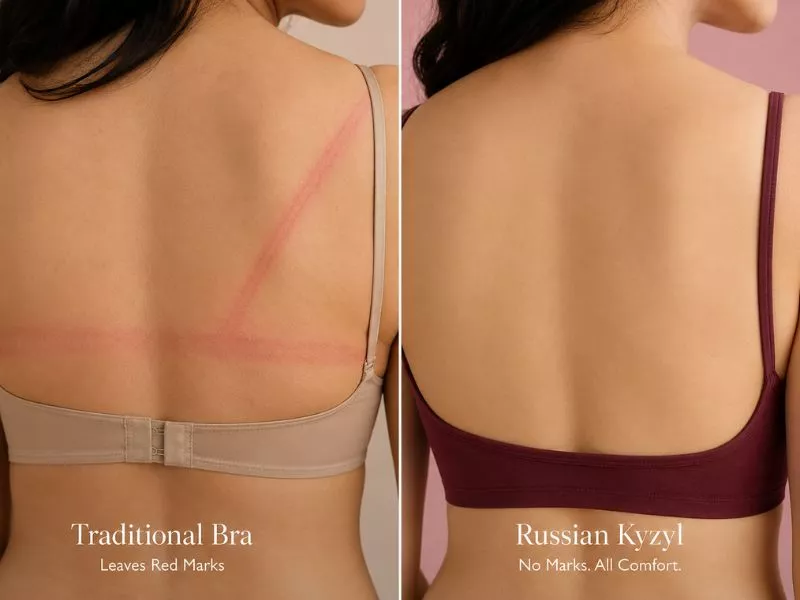
Think about this for one moment.
You put your bra on at 7 in the morning.
You take it off at 9, maybe 10 at night.
That is 14 hours. Every single day. 365 days a year.
No other garment spends that much time pressed directly against your skin. Not your kurta. Not your jeans. Not your jacket.
Only your bra.
So here is the question that the entire Indian lingerie industry has never wanted you to ask —
Do you actually know what your bra is doing to your skin during those 14 hours?
Not what it looks like. Not what size you are wearing. Not which brand made it.
What is it made of. How was it built. And what is it pressing against your skin all day long.
Because the answer — depending on which bra you are wearing — might genuinely surprise you.
Your Skin Is Not Just a Surface. It Is a Living Organ.
Your skin is the largest organ in your body. It breathes. It absorbs. It reacts. It communicates.
When something presses against your skin for 14 hours every day — it is not a neutral experience. Your skin responds. It adapts. And when what is pressing against it contains friction, rigid edges, or chemical adhesive, your skin tells you about it.
Red marks on your ribcage at the end of the day. Irritation under your arms by afternoon. That rash along your bra band that you assumed was just your skin type. The itching that starts around hour eight.
None of that is your skin being difficult.
That is your skin responding to what you are pressing against it every single day.
And to understand why it is happening, you first need to understand the three ways a bra can be built — because most Indian women have never been told the difference.
Three Bra Constructions. Three Very Different Stories for Your Skin.
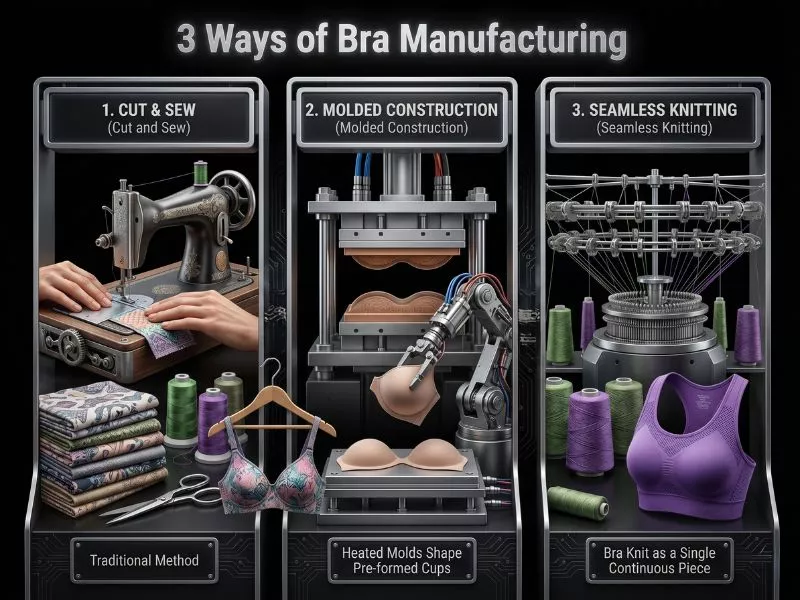
Construction 1 — Cut-and-Sew Traditional Bra
This is the original. The bra that has been sold in India for decades. The one your mother wore and her mother before her.
It is built by cutting fabric into separate pieces — cups, wings, band, straps — and then stitching them together, layer by layer, seam by seam, with machines and by hand.
What this means for your skin is simple.
Every stitch line is a ridge. Every joined edge is a pressure point. Every seam that crosses your skin for 14 hours is an opportunity for friction, rubbing, and irritation.
The underwire that sits under your bust? Rigid. Unyielding. Cannot adapt to how your body moves or breathes through the day.
The band sitting across your ribcage? Stitched and structured. It holds its shape — not yours.
The marks you see on your body at the end of the day are not random. They are a map of every seam and ridge that pressed against you since morning.
Cut-and-sew construction was designed around silhouette and shape. Comfort across a 14-hour day was simply not part of the brief.
Construction 2 — The Bonded Bra. The One Being Sold to You as Seamless.
A few years ago, Indian women started asking for something better. Less visible. Less rigid. Less painful by evening.
So brands responded. They introduced the seamless bra. Beautiful packaging. Soft marketing language. The promise of all-day comfort with no visible lines.
And Indian women bought it — because anything sounded better than the traditional bra digging in all day.
But here is what the brands never told you.
The bonded bra is still cut from separate pieces of fabric — exactly like the traditional bra. The only difference is that instead of stitching those pieces together, brands use heat-activated glue and chemical adhesives to bond the edges flat.
No visible stitch lines on the outside. Smooth appearance under clothes.
But chemical adhesive pressed directly against your skin for 14 hours every day.
Think about that for a moment. Not a seam. Not a stitch. Actual glue. Sitting on your skin from morning to night.
And then consider what happens over weeks of daily wear and regular washing —
The adhesive weakens. The bonded edges start peeling and lifting. The fabric loses its stretch. And those peeling edges — now uneven and rough — begin pressing against your skin in ways the brand never advertised.
The itching gets worse over time, not better. The redness returns even when you switch sizes. The discomfort that was supposed to disappear with a seamless bra never quite goes away.
Because it was never a size problem. It was a construction problem.
Not one single brand selling bonded bras in India has ever written on the label: this product is made using chemical adhesive that sits against your skin.
They called it seamless. They marketed it as comfort.
Now you know what it actually is.
Construction 3 — Knitted Seamless. Built Differently From The First Thread.
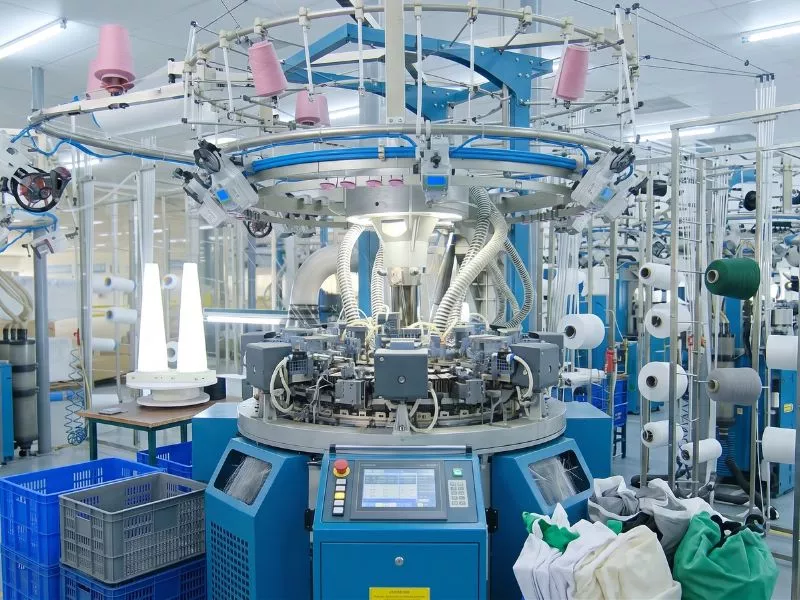
This is what Russian Kyzyl is built on. And this is where the story finally becomes the one every Indian woman deserved to hear from the beginning.
Knitted seamless is not a variation of the bonded bra. It is not a softer version of cut-and-sew. It is not a marketing word designed to sell comfort.
Knitted seamless is a completely different manufacturing technology.
A knitted seamless bra is not cut from fabric. Nothing is stitched together. Nothing is bonded with glue or chemical adhesive.
It is knitted as one single complete structure on an advanced circular knitting machine. The cups, the band, the sides — the entire garment is created as one continuous piece, from the very first thread to the very last.
No cuts. No joins. No stitching. No bonding. No chemical adhesive. No glue touching your skin. Ever.
The result is a bra that has no rigid edges, no pressure points, no peeling bonds, and no chemical contact with your skin.
It moves exactly as your body moves. Four-way stretch that adapts to every breath, every shift, every hour of a 14-hour day. Not fighting your body. Not holding it in a fixed shape. Simply moving with it.
After 14 hours in a Russian Kyzyl knitted seamless bra — no marks. No redness. No end-of-day relief moment when you finally take it off.
Just skin that was treated the way it should be treated every single day.
Why 14 Hours Changes Everything
A bra that causes mild irritation for one hour is uncomfortable.
A bra that causes mild irritation for 14 hours, every single day, for years — that is a skin health conversation.
Repeated friction against the same areas of skin causes chronic irritation. Repeated chemical contact from bonded adhesive can trigger sensitivity reactions over time. Repeated pressure from rigid stitched edges leaves marks that eventually become more than just temporary.
The Indian lingerie industry has never talked about this. Because talking about it means explaining how their products are made.
Russian Kyzyl was built to have exactly this conversation.
Not because it makes for good marketing. But because Indian women spend 14 hours a day in this garment and they deserve to make that choice with full information.
Learn more about what Russian Kyzyl Lingerie is made up of
What Russian Kyzyl Built — And Why

Russian Kyzyl was founded in Kolkata by three women who understood one thing clearly.
The most worn garment in an Indian woman’s day should be the most carefully built one.
Using true knitted seamless technology — advanced circular knitting that creates each garment as one unbroken structure — Russian Kyzyl builds lingerie and activewear where your skin’s experience across 14 hours is the starting point of every design decision.
Every Russian Kyzyl bra, bralette, brief, and activewear piece is:
- Knitted as one complete piece — zero cuts, zero joins, zero glue touching your skin
- Four-way stretch throughout — adapts to your body’s movement all day
- Sweat-wicking construction — keeps skin dry and fresh through long days
- Zero chemical adhesive — no bonding agents, no heat-activated glue, nothing synthetic pressed against your skin
- No rigid elastic edges — no pressure points, no marks, no end-of-day relief needed
- Consistent across every wash — no peeling, no weakening, no degrading adhesive over time
This is not a premium version of what already exists in the market.
This is a fundamentally different approach to building the garment that touches your skin the most.
Frequently Asked Questions
A. Not worried — but informed. Many women adapt to low-level daily irritation without recognising it as a response to their bra construction. The red marks, the end-of-day relief, the itching that starts in the afternoon — these are common enough that most women assume they are normal. They are common. They are not inevitable. If you have never experienced these things, your current bra may genuinely work for your skin. If you have — even occasionally — the construction of your bra is worth reconsidering.
A. This is exactly what happens with bonded bra construction over time. The heat-activated adhesive that bonds the fabric edges weakens with repeated washing and daily wear. As it weakens, the bonded edges begin peeling, lifting, and pressing unevenly against your skin. What felt smooth on day one becomes rough and irritating over weeks. This is not your skin changing — it is the bra’s construction degrading. Knitted seamless construction has no adhesive to weaken, which is why it maintains its comfort consistently over time.
A. Prolonged daily contact with chemical adhesive — particularly for skin that is already sensitive — can cause contact dermatitis, chronic irritation, and increased skin sensitivity over time. This varies significantly between individuals. Some women react immediately, others over months or years of daily exposure. The concern is not that every woman will have a severe reaction. The concern is that no woman should be in daily contact with chemical adhesive against her skin without knowing it is there — and without having been offered a genuine alternative.
A. Knitted seamless technology has been used in global performance and activewear manufacturing for years. It is common in European and international markets. It has not been widely introduced in India because the machinery investment is substantial and the manufacturing process is significantly more complex than cut-and-sew or bonded production. Most Indian lingerie brands have not made that investment. Russian Kyzyl was built from the ground up around this technology specifically to bring it to Indian women.
A. Yes. Support in a knitted seamless bra comes from the stretch recovery built into the fabric structure itself — the way the knit holds and responds to your body — rather than from rigid underwires or structured padding. For everyday wear, work, travel, yoga, and light activity, Russian Kyzyl’s knitted seamless construction provides consistent, adaptive support that moves with your body rather than holding it in a fixed position. The support is real. It simply does not rely on rigidity to deliver it.
A. Because red marks from a bra are almost never a size issue. They are a construction issue. Marks from a band or underwire are caused by rigid stitched edges that cannot adapt to your body’s natural movement and breathing. Marks from straps are caused by structured edges digging into soft tissue. Getting the right size reduces the severity — but it cannot eliminate marks caused by construction. Only removing the rigid, stitched, or bonded edges eliminates them. That is what knitted seamless construction does.
A. Most brands using the word seamless on their labels are selling bonded bras — fabric cut into pieces and joined with heat-activated adhesive. True knitted seamless means the garment is knitted as a single complete piece with no cuts, no joins, and no adhesive at any stage of manufacturing. Russian Kyzyl uses true knitted seamless technology. If a brand cannot explain exactly how their seamless garment is manufactured — whether it is bonded or knitted — it is almost certainly bonded.
A. Longer, in most cases. Traditional bras degrade at their stitch lines and underwire casings over time. Bonded bras degrade at their adhesive bonds — often visibly peeling within months of daily wear. Knitted seamless bras have no stitch lines to fray and no adhesive to weaken. The fabric structure is the garment — and when cared for correctly, it maintains its shape, stretch, and comfort significantly longer than either alternative.